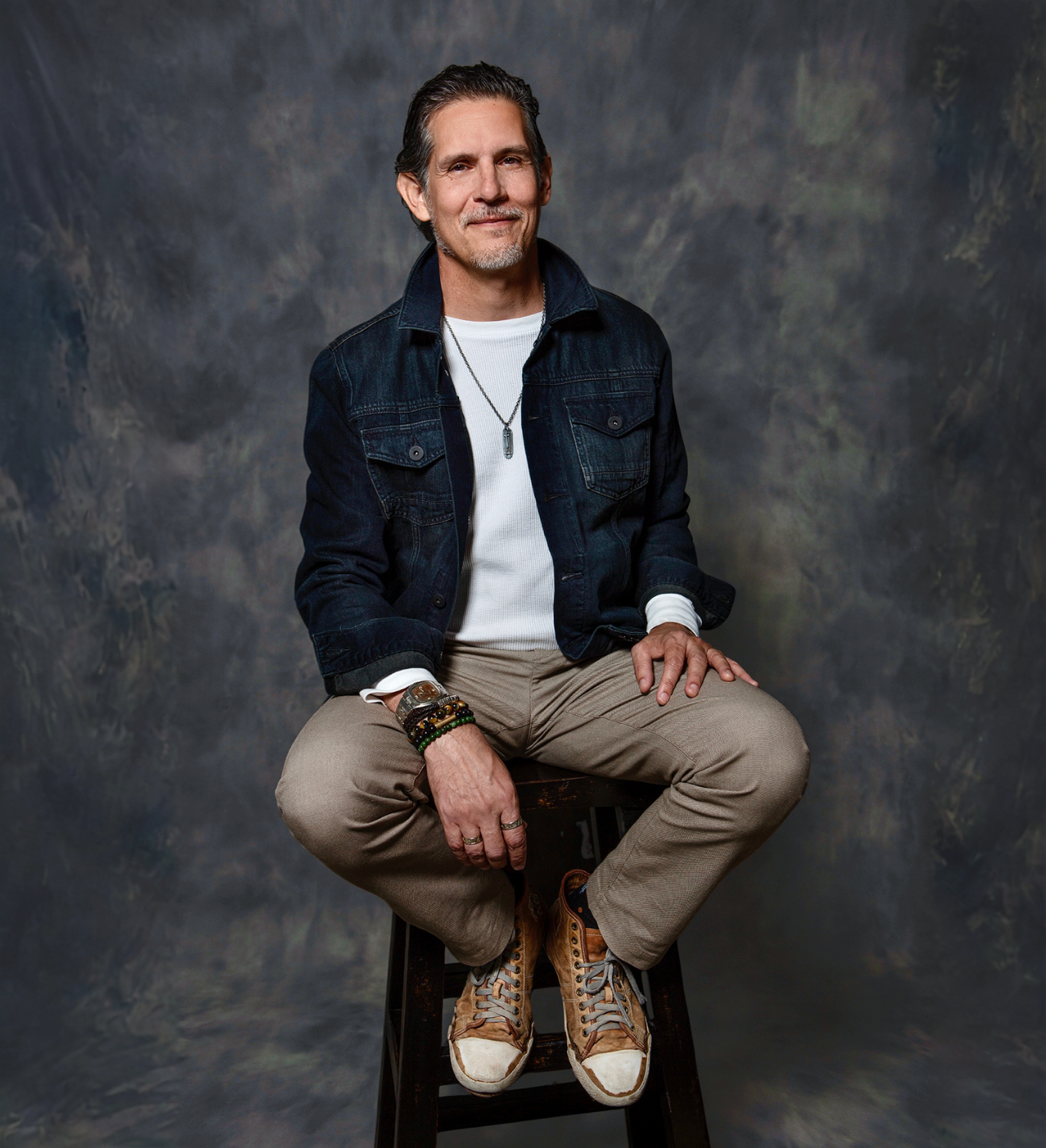
For the talks that change the room
Two days. Your keynote, written.
Even if you walk in with nothing.
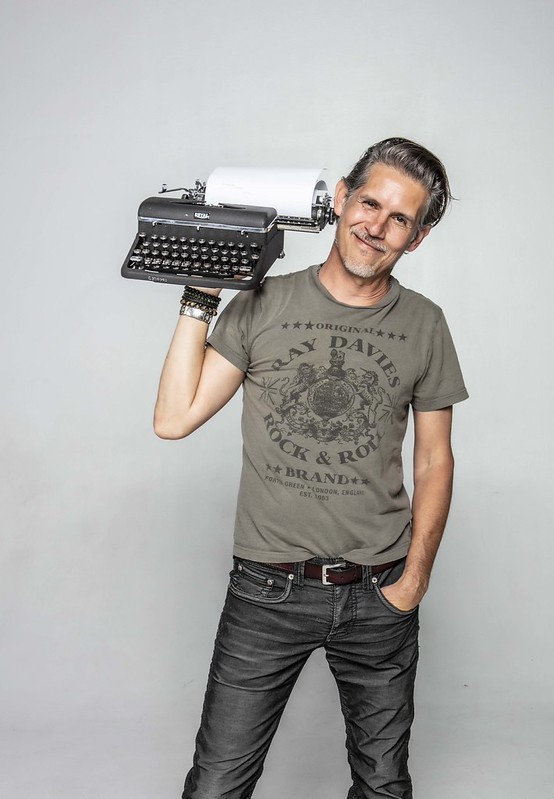
The Work
What happens
My client Ellen Long once told me how she refers leaders to speaker coaches. I refer you a lot, she said. But if someone’s looking for a nuts-and-bolts talk, I tell them: you can use almost anyone for that. Patrick is the guy you get for your life-changing talks. It’s the cleanest description of what I do that anyone’s offered me.
Most call me for the most important talk of their lives — yet.
I coach leaders, speakers, and executives who need to be ready for a stage that matters. My own clients have called me a speakers’ speech coach — meaning I work with people who already speak, who already have audiences, who want to do all of it better. Or who need to do something new, and need to do it well.
Sometimes you arrive with an idea, a story, an angle. Sometimes you don’t — you’ve been booked for the keynote and the page is still blank. Either way, two days is enough.
We start on Zoom. Two hours, working. I ask the questions that pull out what you actually have to say. By the end of the call we both see the shape of your talk. The in-person work begins on target.
Then you fly to San Diego. You stay at the House of Bliss, my reimagined 1903 home in Hillcrest — infrared sauna, fire pit, putting green, an arcade room, and a secret room behind a bookshelf. You’ll find it. The house was built for inspired moments. So are the two days inside it.

The House of Bliss, Hillcrest, San Diego.
Over those two days, one-on-one, we co-write your talk. I do the heavy lifting. We outline it, extract your stories, find the humor, design the audience interactions, sharpen the through-line. You leave with a comprehensive outline-script — so detailed you’ll know your talk by the time you leave.
Then we polish. Two or three more working Zoom sessions after the immersive — refining, adding the slides or props or handouts, locking in your pre-talk routine. You have my phone number from the moment we start until you walk on stage.
That’s the immersive — drawn from thirty years of professional speaking, fifteen years of comedic performance, and a roster of working speakers and CEOs who’ve used the same path to a talk they’re proud of.
For clients who need spot work — a single talk to refine, a single problem to solve — there’s a Zoom-only path. Same approach. Less immersion. No House of Bliss.
The Talk
The one that’s only yours
The thing no copy prepares clients for is how easy this work is once we start.
The right subject.
The hardest part of being a speaker isn’t the writing or the delivery. It’s knowing the right subject — the one that’s so you, so close to what you’ve actually lived, that talking about it feels like explaining how to make a peanut butter and jelly sandwich to an audience that’s never made one. Easy. Endless. Yours. That’s the first thing I look for with every client. Before the writing, before the staging, before any of the polish: finding the talk only you can give.
I have a rule for this — one I came up with the hard way. Call it my 80% rule: only speak on what you do as well as or better than 80% of your audience. It’s a brutal filter, and it’s the difference between speakers who get hired and speakers who get remembered. When you land on the subject that passes it, everything else gets easier. You’ll have no shortage of stories — your entire life turns out to have been an individualized learning track for that one topic. The talk doesn’t get written from scratch. It gets excavated from what you already know.
Built for you, not from a formula.
Structure follows subject. I have a structure I know works — sharp, proven, deliverable — and I share it with any client it fits. When it doesn’t, I throw it out and we build the one that does. Lee Asher is the best natural storyteller I’ve ever coached. We structured his keynote as story after story after story, nothing else. It killed. One of the greatest keynotes I’ve ever seen. That talk wouldn’t have existed if we’d forced him into a frame.
The two craft problems most coaches duck, I’ve solved. The dry leader who needs to be compelling: the answer is their own stories — usually the ones they’ve been carrying privately for years, waiting to be put to use. The unfunny speaker who needs to be funny: the answer is borrowed humor strategically deployed, with room for their own humor to emerge (everyone has some). Both are craft problems with craft solutions.
Most coaching also treats speakers as gender-neutral. On stage, the reality is different. Women navigate audience expectations men don’t, and a different path to authority at the podium. Four years coaching the Association of Women Surgeons taught me how to address that work specifically. I bring what I learned there to every woman client.
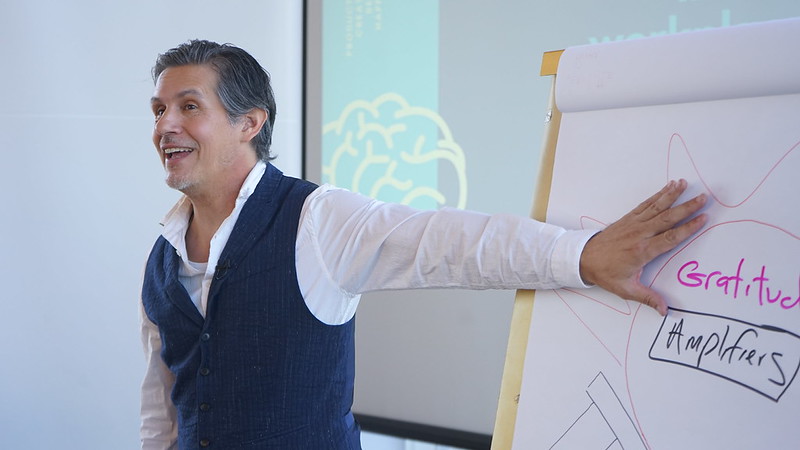
In the immersive — working a client’s talk.
Why two days is enough.
What used to take me three months alone, I can now do with a client in two days. Not magic — accumulated experience: thirty years of speech writing, fifteen years of comedy stages, books, persuasion frameworks, thousands of facilitation hours. The result for the client is relief.
Clients tell me the work feels almost therapeutic. They arrive worried about a speaking opportunity and leave with something different: their own life experience suddenly visible to them as wisdom they can hand to a room. What most speakers want most is an amplified voice. The keynote is the deliverable. Your voice in the world is the takeaway.
On stage, and after.
The part most coaches skip: performance. On-stage presence. The pre-talk routine that quiets the anxiety that comes for everyone, even the seasoned. I coach that too. By the time you walk on stage, your nerves are doing their job for you, not against you.
My clients always call me first — before they’ve even left the auditorium. They crushed it. Got a standing ovation. Did it. They try to give me the credit. I don’t accept it. A coach can help, but on stage it’s all you.
And what I teach them: a standing ovation isn’t the measure. Word-of-mouth bookings are.
I love helping leaders give the keynote they’ve been wanting to give for years. That’s the work.
The Roster
Past and current clients
Their keynotes have gone to Davos, to Mindvalley, to TEDx, to national speaking tours, to conference and corporate stages worldwide.
Steve Rodgers — keynote for Davos, conference and corporate stages
Reed Timmer — keynote for national speaking tour
Lee Asher — keynote for national speaking tour
Steffani LeFevour — Mindvalley and several conference keynotes
Amy Schutte — Tedx Oxford talk
Mark Lombardi, President of Maryville University — fundraising keynote
Guillermo Romo — keynote as CEO of Herradura Tequila, delivered to his people under the founding tree at Casa Herradura in Mexico
Mahsa Khodabakhsh — TEDx talk, conference and corporate keynote
Rob Kain — TEDx talk
Alyssa Nobriga — Mindvalley keynote
Martin Latulippe — multiple keynotes including his Canadian Speakers Hall of Fame induction
Kenny Aronoff — keynote for corporate speaking dates
Samantha Skelly — keynote for conference speaking
Alreen Haeggquist — keynote for legal and author engagements
Re Perez — keynote for conference and corporate speaking
Jason Lee — keynote for conference and corporate speaking
Steve Taubman — keynote for conference and corporate speaking
Ellen Long — keynote for conference and corporate speaking
Heather Dee Frankovich — keynote for conference and corporate speaking
Jarek Tadla — keynote for conference speaking
Raul Villacis — keynote for conference speaking
Dejah Urbanovitch — keynote for Rainbow Girls International Conference
And the Association of Women Surgeons — chosen speaker coach four years running.
References available on request.
First Step
Schedule a call
A fifteen-minute call. We talk about your stage, your timeline, and what you want to walk out with. If we’re a fit, we book the immersive.